Entry 15 (Part 2): Is Gettysburg a Lost Cause Film?

Gettysburg

“We should have freed the slaves, then fired on Fort Sumter.”

This is the line–spoken by Longstreet to Fremantle–that has haunted historians and fans of Gettysburg for 22 years. It’s built on so much faulty and potentially pro-Confederate history, some viewers see it as a clear sign Gettysburg is a Lost Cause film, plain and simple. Maxwell’s disastrous prequel, Gods and Generals, reinforced this view by depicting its Confederate characters through a clearly Lost Cause lens. It’s evident Gettysburg draws some of its inspiration from pro-Confederate myths, but I’ve always thought its overall approach to the Civil War is more nuanced. I kept this in mind during my recent viewing in an attempt to answer one of the central questions revolving around this movie: Is Gettysburg a Lost Cause film? Read More
Seriously Apple? No Confederate Flags in Video Games? (Updated)

Update: It looks like cooler heads may be prevailing and apparently Apple is working to restore some of its apps that use the flag “for educational or historical uses.” No news of Ultimate General: Gettysburg being restored as of yet. New of the game’s removal was surely responsible for the turnaround, as it went viral quickly and even Rolling Stone reported on it this morning. I’ll keep you posted as I hear more about it.

Update 2: Ultimate General: Gettysburg just announced on Facebook that it was able to negotiate with Apple and is now available again as an App, unchanged. Although Apple should never have pulled the game in the first place, I commend the company for recognizing the mistake and respecting Game-Labs’s artistic integrity.


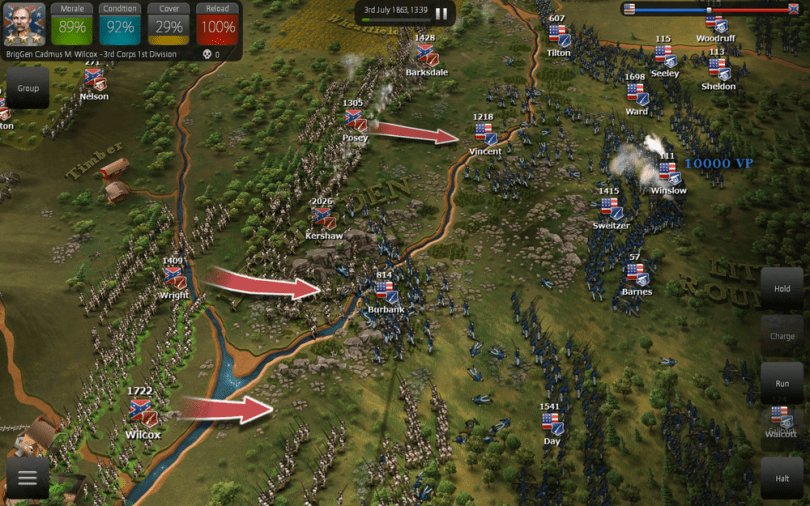
Earlier today, Apple announced that it is no longer going to offer apps in its iOS store that feature the Confederate Battle Flag. I don’t know precisely how many apps this covers, but I do know that it includes Ultimate General: Gettysburg, which I reviewed on this site in February. According to the game’s developer Nick Thomadis, Apple will agree to restore the game if his company, Game-Labs, removes all Confederate flags. Thomadis refused and, although I support most of the efforts to remove Confederate iconography currently going on across the nation, I completely support Thomadis in this decision. Read More

On the Confederate Battle Flag

Dukes of Hazzard: Return of the General Lee - PS2 Artwork

In the wake of last week’s horrifying tragedy in Charleston, SC, there has been a long overdue widespread discussion about public displays of the Confederate Battle Flag. I’m reluctant to add to the conversation because it’s becoming cacophonous and I’m generally in line with those who believe that the flag, like the Confederacy it represents, is inseparable from its white supremacist origins (there have been an absolute flood of articles and think-pieces about the flag since the shooting, some of which are excellent, but I’ll just recommend Jon Coski’s wonderful book on the flag). Since then, South Carolina governor Nikki Haley has called for the removal of the flag in Columbia and, last night, Mississippi House speaker Philip Gunn requested a redesign of the state flag to eliminate the Confederate emblem. What truly shocked me, though, was Walmart and Ebay stating they will no longer carry any products that display the flag. With this development, the issue moved into the realm of popular culture and I thought I’d chime in on that score. Read More

Entry 15 (Part 1): Football Analysts and Generals

Gettysburg Movie Poster

Gettysburg. Written and directed by Ronald F. Maxwell. Based on the novel, The Killer Angels, by Michael Shaara.

Release date: October 8, 1993.

As I mentioned in my last post, Gettysburg is kind of a big deal in the Civil War community. I first saw it long before I imagined becoming a professional historian, so my views on the film have evolved as I’ve learned more about the war. However, the aspect that stood out during my most recent viewing was one that hadn’t struck me before: for a movie that includes so much depiction of and talk about death, it’s remarkably bloodless. Combat scenes that seemed impressively realistic twenty years ago now play more like sterile pageants. Maybe I was naive back then, but this is not the same war I read and write about now. So I began to wonder, is Gettysburg one of the prime culprits in propagating the “football analyst school” of Civil War history?

Read More

Gettysburg! Gettysburg!

Gettysburg_chamberlain_400

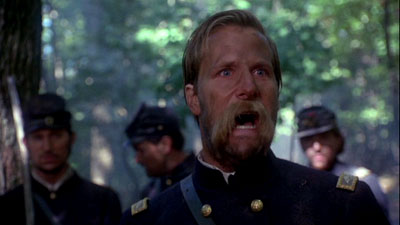
Jeff Daniels reacts to my decision to devote two entire posts to Gettysburg.

Some of you likely noticed that Gettysburg will be the subject of my next review. For those who don’t know, this movie carries a significant amount of weight among historians and buffs–deservedly so or not. We’ve all seen it multiple times and have favorite lines (usually to mock, and usually by Sam Elliott) and lots of opinions.

It’s also super long.

Thus, after watching it for the first time in several years, I’ve decided to devote two entries to it, instead of my usual one. Each review will follow a different line of inquiry, since the film directly addresses my two favorite blog topics: the “football analyst school” and the Lost Cause. So, keep a clear eye me boyo, and join me for a thorough examination of how one of the Civil War’s best known modern films fits with the rest of Civil War pop culture. For those who think reading around 2,000 words on a Ted Turner film will leave them so very tired, just skip over these reviews, but stay tuned because I have an exciting guest post lined up for my next subject.

BBC Radio’s Civil War Music Doc is Great!

https://i0.wp.com/cdn.loc.gov/service/pnp/ppmsca/34500/34574r.jpg

During the past two weeks, BBC Radio 2 ran a documentary on Civil War music and I strongly recommend it. It gives a good mix of narration by Kris Kristofferson, commentary from experts, and great renditions songs from and inspired by the war. The first part covers music during the war and the second examines its influence on music history and Civil War memory. It brings a great deal of depth to the subject and the producer should be commended for the amount of work that clearly went into the project. Civil War historians, buffs, and even those just interested in music or history should really give it a listen. I’m really honored to have been a part of it.

Part 1

Part 2

Read More

Entry 14: Filling in the Civil War’s Dark Outlines

Battle Lines: A Graphic History of the Civil War. By Jonathan Fetter-Vorm and Ari Kelman.

Release Date: May 5, 2015.

“The Civil War was unspeakably bloody.” So begins Jonathan Fetter-Vorm and Ari Kelman’s harsh but fascinating new comic book about the Civil War.* The sentence serves as a disclaimer to the reader: The Civil War was awful and you cannot refine it. This isn’t the kind of simplified family-friendly Civil War comic you might find in a Gettysburg gift shop. What Fetter-Vorm and Kelman have done is show how combining text and imagery is a highly effective way to depict the war as a massive American tragedy, not the great American epic. Read More

Are Things Looking Up for the Civil War on TV?

Mercy Street PBS Cast

Mary Elizabeth Winstead and Josh Radnor in Mercy Street.

Two months ago, I rejoiced that Amazon users did not greenlight Point of Honor. On the other hand, I wondered if the reason had less to do with the show’s crappiness and more to do with a general lack of interest in the Civil War from TV audiences. Surveying the scene now, it looks like producers don’t share my concerns. No less than three major networks are developing projects dealing with some aspect of the Civil War era. I have some reservations but the fact this is happening at all–and on the heels of the sesquicentennial, when one would expect Civil War fatigue–seems like a win. Read More

Entry 13: Tom Petty was Born a Rebel

<em>Southern Accents</em> (1985)

Southern Accents, Tom Petty & the Heartbreakers. Produced by Tom Petty, Jimmy Iovine, Mike Campbell, David A. Stewart, and Robbie Robertson.

Release Date: March 26, 1985.

In 1985, Tom Petty was one of the most successful Rock artists in the world. However, critics considered him as a second-tier New Wave act–not as complex a lyricist as Elvis Costello, not as catchy a tunesmith as Ric Ocasek, and not as experimental as The Police. Partially in response to these criticisms, Petty started broadening his sound in the mid 1980s, a shift that eventually resulted in a career revival after 1989’s George Harrison- and Jeff Lynne-influenced Full Moon Fever. Along the way, Petty made his most lyrically and musically ambitious album: Southern Accents. It also happens to be about the Lost Cause.
Read More

On Reenacting a Funeral

Lincoln Funeral Procession Reenactment

I’ve only lived in three places in the United States and it’s been a strange coincidence that two of them were fixated on historical figures. Upon moving to Tuscaloosa, Alabama, I quickly discovered that images of storied Crimson Tide football coach, Paul “Bear” Bryant, were near inescapable. Go to the bank, the doctor’s office, even McDonalds, and there would be the Bear–usually squinting off to the horizon, seemingly contemplating his next national championship or victory over Auburn. I now view this as rehearsal for life in Springfield, Illinois, which boasts the most famous American in history as a former resident. Abraham Lincoln is everywhere in this town and, in part, the very engine that keeps it running (sorry state government, you’re a distant second). The message I received as a foreigner and a newcomer in both places was clear: either be part of this cult of personality or be an outsider. Read More