April Talks
With the sesquicentennial anniversaries of Appomattox, Lincoln’s assassination, and Lincoln’s funeral around the corner, there are a lot of special events going on here in Springfield. I’ll be involved in two of them. Read More
With the sesquicentennial anniversaries of Appomattox, Lincoln’s assassination, and Lincoln’s funeral around the corner, there are a lot of special events going on here in Springfield. I’ll be involved in two of them. Read More

Star Trek, “The Savage Curtain,” Season 3, Episode 22. Directed by Herschel Daugherty. Written by Gene Roddenberry and Arthur Heinemann.
Release Date: March 7, 1969.
I was originally going to write about this deeply strange Star Trek episode further down the road, but Leonard Nimoy died recently, so I’ll offer this post as my own little tribute. I was a huge “trekkie” growing up and still have a soft-spot for the show, but even at the height of my fandom, I knew this episode was a stinker. Just as “The South Rises Again” aired during the The Beverly Hillbillies‘s nadir, “The Savage Curtain” came near the end of Star Trek‘s run, when the wheels were clearly coming off. It’s a typical third season episode–the premise is weak and absurd, and any interesting questions raised by the script are never satisfactorily answered. However, it prominently features the Civil War’s most popular and significant historical figure, Abraham Lincoln, and is therefore worth this blog’s attention. Read More

Point of Honor is dead! Long live Point of Honor!
By now, many of you know Amazon did not greenlight Point of Honor. Given that the pilot episode was almost universally panned–including by me (other examples are here, here, and here)–we can call this a win for good history and good TV, but I’m reluctant to declare total victory. Viewer votes determine which pilots Amazon greenlights, so Point of Honor‘s failure clearly indicates audiences weren’t impressed. But why weren’t they impressed and what does that mean for the current state of the Civil War in popular culture? Read More

“Marching through Georgia.” Music and Lyrics by Henry Clay Work.
Release Date: January 9, 1865.
Available: Audio by Old Crow Medicine Show and as sheet music.
I’m delighted to announce that my final New York Times Disunion piece is up. As I mentioned in an earlier post, it discusses Henry Clay Work’s most popular song, “Marching through Georgia.” You can read it here. Thanks again to Clay Risen for including me in this awesome endeavor.
“We’ll Go Down Ourselves.” Words and music by Henry Clay Work.
Release Date: December 13, 1862.
Available: audio (fast forward to 33:35) and as sheet music.
I’ll admit that this gem from Henry Clay Work slipped under my radar until I was asked to make some remarks about it for a Civil War music concert at the Newberry Library. My previous research largely focused on the war’s most popular songs and there isn’t much evidence that “We’ll Go Down Ourselves” enjoyed much popularity, then or now, but it’s a fascinating piece for a number of reasons. Read More

“Wake Nicodemus.” Words and Music by Henry Clay Work.
Release Date: November 23, 1864.
Available: As sung by Burl Ives & as sheet music.
As the end of the Civil War sesquicentennial approaches, so too does the end of one of its most successful elements, the New York Times Disunion Blog. Clay Risen has done a great job curating and editing this collection of thoughtful short essays and I’ve been fortunate enough to be included among its authors. My final contribution will appear in a couple of weeks and discuss the history and resonances of “Marching through Georgia.” I grew to admire the song’s author, Henry Clay Work, while researching my book, so I’ve decided to devote a couple of entries to some of Work’s lesser-known pieces in anticipation of my Disunion article. Today, I’ll focus on one of his most abolitionist Civil War tunes, “Wake Nicodemus.” Read More
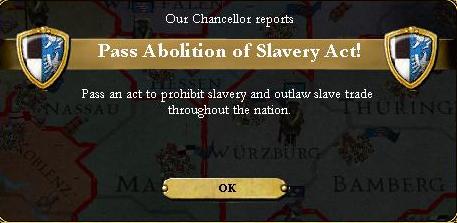
In my last post, I fretted about some of the unethical choices I was making in Ultimate General: Gettysburg. I’ve continued to think about the issue over the past couple of days and I have a few more comments because I think for a certain subset of people, these games are the primary way they interact with history. In essence, the central question here is the same that’s preoccupied designers and critics of modern games like Grand Theft Auto: Is something that’s immoral in real life equally immoral in a video game?
Read More

Ultimate General: Gettysburg. Designed by Nick “Darth Mod” Thomadis and Ilias Georgopoulos.
Release Date: October 16, 2014
I’m only a little embarrassed to admit I’ve been playing historical video games for almost three decades. Games like Civilization, Defender of the Crown, and Panzer General actually inspired some of my initial interest in history. It’s difficult to pinpoint what I still like about them, but it’s nice to occasionally engage with history in an uncomplicated and less intellectual way. I came into history as a buff and I like briefly revisiting that mindset. The problem is there’s really no going back. My mind starts considering the historical implications of what I’m doing whether I want it to or not. This can just make a game seem like a dumb waste of time but sometimes it can even make me feel a little guilty, especially if its a Civil War game. Read More

Before shifting away from historical fiction for a few weeks, I want to make a few observations about women in Civil War pop culture. After reviewing Point of Honor and Cold Mountain (heck, even after The Beverly Hillbillies), it occurred to me that stories about the Civil War much more prominently feature female characters than fiction about other American wars. Sure, the Civil War has more than its share of guys-only stories (I don’t think there’s a single woman in Gettysburg, for instance) but it seems to me women are central to the way the Civil War is popularly represented and perceived. Indeed, the most popular and significant fictional treatment of the war, Gone With the Wind, has a strong female protagonist. Read More

Cold Mountain. Written and directed by Anthony Minghella. Based on the novel by Charles Frazier.
Release Date: December 25, 2003.
In his book on the Civil War in popular culture, Causes Won, Lost, and Forgotten, Gary Gallagher argues that Cold Mountain is, in part, a revision of Gone with the Wind‘s take on Confederate women. I decided to focus on this as I re-watched the film for the first time since it came out in 2003. It didn’t take long for me to realize this is, in fact, the only way to watch Cold Mountain. This movie is all about the ladies. Read More

 Civil War Pop